2010/09/16
2010/08/29
ANIMALS YOU CAN SEE IN RIO DE JANEIRO
these funny monkeys you see around Tijuca Forest and Christ the Redeemer
T
the guati you can see inside Tijuca Forest Park
the pink bird can be seen at Marapendi Wetland
The turtles are in a lake in front of the entrance of Botanical Garden
Tucans you usually see then at Tijuca forest , Botanical Garden , ( at the backyard of my house )
this bird was on Gigóia´s Island in Barra da Tijuca
you can see the gold hand monkeys on Tijuca Forest , Christ the Redeemer , Sugar Loaf , City Park ( Niterói ) Gigóia´s Island , on the backyard of mu house
SELARON STAIRCASE
The Selaron stairscase is located in the heart of Lapa and Santa Teresa neigborhood , with 250 stairs measuring 250 meters long this became a tourist place in Rio and is known all over the world , Jorge Selaron a Chilean born artist that lived in more than 50 countries and decided to come to Brazil in 1990 he started to work in this staircaise that was almost abandoned and beggin to create a nice colorful design and has painted more than 300 tiles
In his work he decided to collect several tiles from all over the world people who visit this place send the tiles from their countries and he has now 20.000 tiles from 60 countries 
he consider his work never complete and will be finish only in the day of his death he `says ` first this tiles were scavenged from various construction sites and piles of urban waste found on the Rio streets. Today however, most of the tiles are donated by visitors 
he paints pregnant African woman and he doesn’t comment on this except to say that it is a “Personal problem from his past” , he has invented a fantastic unique technique which consists of constantly changing the tiles, he sayd that this gives him a unique energy, and makes it a living, mutating work of art he just love what he does .
2010/08/21
INDIGENOUS TRIBE TEKOA MBOY-TY IN NITERÓI
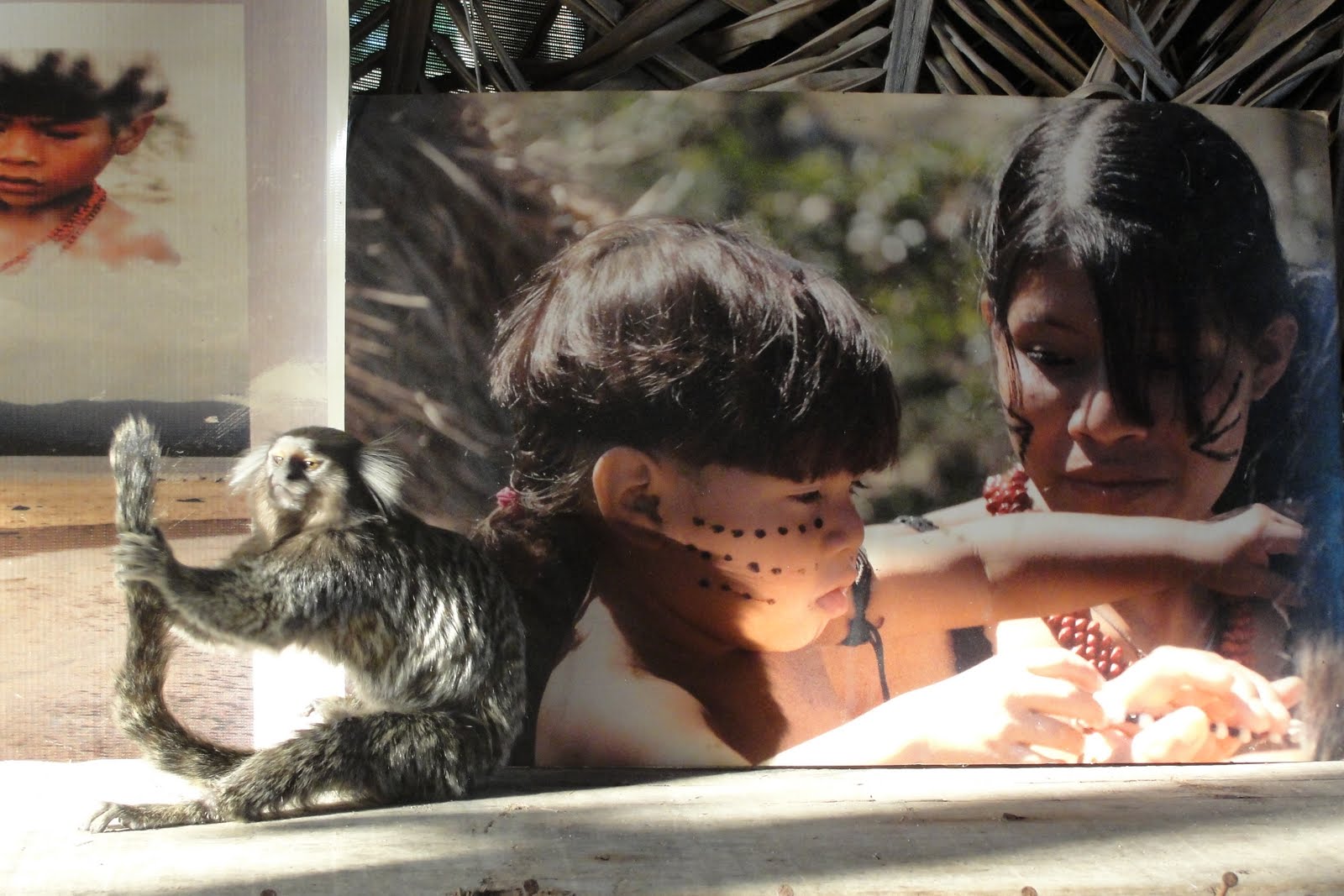
The Tekoa Mboya-Ty tribe which means village of the seed consists of about 60 members and was officially installed on the beach in Camboinhas in early 2008. At that place listed by the Institute of Historical and Artistic Heritage (Iphan), there are Indigena burial grounds, known as Sambaqui.
The region currently occupied in Niteroi has been inhabited for 9000 years ago by hunters and fishermen who left traces of their passage as large Archaeological remains, the shell mounds. Tambaquis are the remains of shells, human skeletons, pottery, axes and arrowheads of stone that were buried and gone through a process of fossilization. These testimonies are very common in the Brazilian coast and are extremely valuable for archaeologists today can understand how worked these prehistoric societies.
In Niterói today there is a large archaeological area of Sambaquis along the Great Dune at Itaipu beach in the oceanic region. Very near this area , you can find the Archaeological Museum of Itaipu, which exposes the Sambaquis that were found in this region.
The Guarani tribes in numbers are now about five thousand people and their economic activities are fishing , cooking and crafts that they sell for their own subsistence .
This tribe still have the tradition of dance and music in their village
2010/08/20
FESTA JUNINA
June festivals or feasts of the saints are popular celebrations that take place in several countries historically linked to the pagan festival of the summer solstice, which was celebrated on June 24, according to the Julian calendar (pre-Gregorian) and Christianized in the Middle Ages as " Feast Saint John. "These celebrations are particularly important in northern Europe - Denmark, Estonia, Finland, Latvia, Lithuania, Norway and Sweden - but are also found in Ireland, Galicia, parts of Britain (Cornwall especially), France, Italy, Malta, Portugal, Spain, Ukraine, other parts of Europe and other countries like Canada, United States, Puerto Rico, Brazil and Australia.
Of European origin, the bonfires are part of the ancient pagan tradition of celebrating the summer solstice. As the Christianization of pagan tree "evergreen" Christmas tree, the fire of the day of "Midsummer" (June 24) became, little by little in the Middle Ages, an attribute of the feast of St. John the Baptist, saint celebrated on that day. Even today, the fire of St. John is the common thread that unites all the European celebration of St. John (from Estonia to Portugal, Finland to France). A legend Catholic Christianize the pagan bonfire summer says that the ancient custom of lighting fires in the early summer had its roots in an agreement made by cousins Mary and Elizabeth. To tell Mary about the birth of John the Baptist, and get their help after the birth, Isabel had to light a bonfire on a hill.
As Brazil can be divided into two distinct types: the feasts of the Northeast region of Brazil and the redneck party, in the states of São Paulo, Paraná (north), Minas Gerais (especially in the southand Goiás
In the Brazilian Northeast is celebrated with small or large parties that unite the whole community and many tourists, with plenty of food, and much wedding dance. It´s common to the participants of the celebrations they dress the backwoodsman, men with checkered shirt, patched pants with colored cloth, and straw hats, and women with colorful calico dress and straw hat , in the interior of São Paulo still maintain the tradition of conducting fairs and dances around bonfires , in Portugal there are camp with rocket, roast sardines are volunteers and basil, the popular parade marches through the streets and avenues, give themselves with plastic hammers and leek in the minds of people especially in children and when the boys want stick with single girls this is the culture in our Brazil !
Africa World Cup 2010
1 FIRST GAME - BRAZIL 2 / NORTH COREA 1
we were in the group qualified for the final eighth !
it was Brasil 6 x Chile 0 on 28 June at 3.30pm , boy we celebrated again !
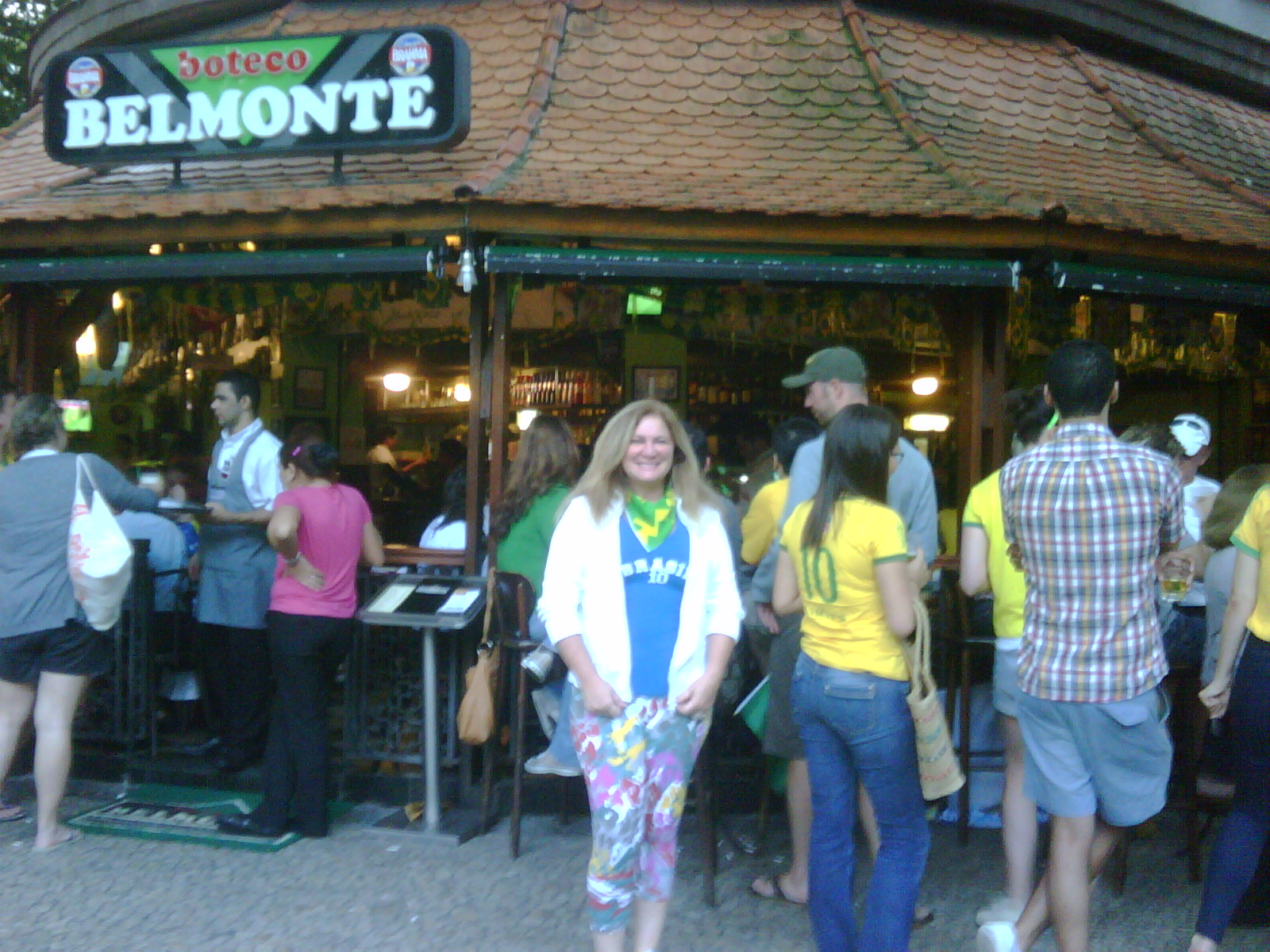
in the quarter finals we had a thrilling game in which the Dutch finally won 2 x 1 Brazil and we returned home! alas!
Our first game and many expectations about who would win, but I think the winds were on our direction because we did 2-1 against North Korea on the 15th June 2010 at 3:30pm and we won!
me and my friends celebrated a lot and we were pleased the outcome was a victory to us!
SECOND MATCH
it was Brasil 6 x Chile 0 on 28 June at 3.30pm , boy we celebrated again !

in the quarter finals we had a thrilling game in which the Dutch finally won 2 x 1 Brazil and we returned home! alas!
2010/08/16
MARACANA STADIUM
Going to Maracanã is to receive the best we have in our country, soccer is the favorite activity of all the people who visit our city, in 2010 World cup in Africa we tried to win all the games ! now Maracanã will undergo a major reform in the Stadium the same that Pelé played , the decision was that the Maracana stadium will be close to the Brazilian championship matches after Sept. 8th , the Brazilian Football Confederation (CBF) said they had a meeting with the Football Federation of Rio de Janeiro (Ferj) to make the decision the closure was motivated "purely for technical reasons in order to preserve the safety and comfort of the fans." Thus, the Maracana will receive only three more matches before being completely closed: Fluminense x São Paulo (August 28th ), Fluminense x Palmeiras (September 1) and Flamengo x Santos (September 5).